

Moving to Castle Pines, CO: Essential Tips for New Residents in 2026
Moving to Castle Pines CO in 2026 means entering a small city that balances open space with suburban convenience. According to U.S. Census Bureau data, Castle Pines has a population of just over 11,000 residents as of the latest estimates, which helps preserve a quieter atmosphere than nearby Denver. New households often focus on school quality, commute patterns, and neighborhood amenities along Castle Pines Parkway and Monarch Boulevard, making advance planning crucial before boxes ever arrive at a new front door.
What should new residents know about Castle Pines in 2026?
Castle Pines sits in northern Douglas County, a few miles south of the Denver city limits along Interstate 25. The city includes both Castle Pines North neighborhoods east of I‑25 and the gated Castle Pines Village to the west. According to the City of Castle Pines, the elevation reaches roughly 6,400 feet, which shapes local weather patterns and outdoor lifestyles. Clear mountain views from many streets, including Castle Pines Parkway and Lagae Road, remind residents that the Front Range is only a short drive away.
The climate favors four distinct seasons, with more than 240 sunny days per year reported for the broader Denver–Aurora area by the National Weather Service. Winter brings snow that melts quickly in the sun, while summer afternoons often cool down after brief thunderstorms. New residents typically pay attention to lawn care rules and wildfire mitigation guidelines set by the Castle Pines North Metropolitan District, especially in neighborhoods bordering Daniels Park and The Ridge at Castle Pines North golf course.
Local governance relies on a council–manager structure, with city services coordinated alongside Douglas County. According to Douglas County’s county profile, the county’s overall population has grown by more than 20% over the last decade, which shapes infrastructure and school planning that directly affects Castle Pines. Residents frequently interact with Douglas County Sheriff’s Office for law enforcement and depend on South Metro Fire Rescue stations along Castle Pines Parkway for emergency services.
Neighborhoods vary from the more established Castle Pines North subdivisions near Elk Ridge Park and Coyote Ridge Park to newer communities around Castle Pines Town Center. Each pocket offers different HOA expectations, trail connections, and access to retail at Castle Pines Village Square and Castle Pines Marketplace, where staples like the King Soopers on Castle Pines Parkway and several locally owned restaurants anchor daily routines. Understanding these micro-areas in advance helps new residents match lifestyle priorities with the right block.
How do housing options and costs compare in Castle Pines CO?
Housing in Castle Pines ranges from townhomes near Lagae Road to custom estates in Castle Pines Village. According to Redfin data through early 2026, most closed sales in Castle Pines fall roughly between $650,000 and $1,200,000, with higher prices in gated golf communities. Inventory often stays under 60 active listings at a time, which can create competitive conditions for well-maintained properties near Timber Trail Elementary and American Academy Castle Pines.
Single-family homes dominate, often featuring three to five bedrooms, finished basements, and two- or three-car garages. Many streets, such as Yorkshire Drive, Daniels Gate Drive, and Castle Pines Drive North, showcase mature landscaping and trail access. Townhomes and paired homes closer to Castle Pines Town Center may provide a more attainable entry point for first-time buyers. According to Zillow, typical home values in Castle Pines have risen in the mid–single-digit percentage range annually over recent years, reflecting strong regional demand.
HOA dues vary considerably. Communities in Castle Pines North sometimes charge between $70 and $120 per month for common area maintenance, while properties inside Castle Pines Village often carry master association dues plus sub-association fees. The Castle Pines Homes Association notes extensive amenities in the Village, including staffed gatehouses, trail systems, and recreation centers. Prospective residents frequently compare these costs with access to amenities like Castle Pines Golf Club and The Country Club at Castle Pines before finalizing a purchase.
Property taxes remain an important consideration. According to the Douglas County Treasurer, the county’s effective property tax rate generally falls around 0.5% to 0.7% of assessed value, lower than many coastal markets but still significant on higher-priced homes. Insurance premiums may reflect proximity to open space near Daniels Park and Buffalo Ridge Park. Understanding total monthly ownership costs—including mortgage, HOA dues, taxes, and utilities—helps new residents choose between neighborhoods along Monarch Boulevard, Serena Drive, and Hidden Pointe Boulevard.
What are schools and family amenities like in Castle Pines?
Public schools in Castle Pines belong to Douglas County School District RE‑1. Timber Trail Elementary on Mira Vista Lane consistently earns high marks. According to GreatSchools, Timber Trail holds a rating near 9 out of 10, supported by strong test scores and parent reviews. Older students typically attend Rocky Heights Middle School and Rock Canyon High School in Highlands Ranch, both located about 5 to 7 miles north via Monarch Boulevard and McArthur Ranch Road.
American Academy Castle Pines, a public charter school on Lagae Road, provides another popular option, emphasizing STEM education across kindergarten through eighth grade. According to American Academy, average class sizes often stay under 25 students, which appeals to families seeking more individualized attention. Additional choices, such as nearby Valor Christian High School in Highlands Ranch and several private preschools along Castle Pines Parkway, expand the educational landscape within a 10- to 15-minute drive.
Afternoons at Elk Ridge Park offer a vivid glimpse into daily life for families in Castle Pines. The smell of barbecue drifts from picnic shelters while children race across the splash pad, their shouts echoing against the hillside. Soft mulch under playground structures cushions small feet, and the bright blue of the climbing walls stands out against views toward Daniels Park. Cyclists roll past on the nearby trail, and the distant hum of traffic on I‑25 fades beneath the rustle of wind through the pines.
Beyond parks, family amenities include the Douglas County Libraries – Castle Pines branch on Lagae Road, which hosts story times and student study sessions. According to Douglas County Libraries, the system circulates millions of items annually across its branches, with Castle Pines contributing a steady share. Youth sports often center on fields at Coyote Ridge Park and Elk Ridge Park, while indoor recreation options expand in nearby Castle Rock and Lone Tree, including facilities at the Miller Activity Complex and Lone Tree Recreation Center.
How does commuting and transportation work for Castle Pines residents?
Castle Pines lies directly west of Interstate 25, which forms the primary commuting corridor toward Denver and Colorado Springs. According to City-Data, average one-way commute times for Castle Pines residents hover around 30 minutes, reflecting jobs scattered across the Denver Tech Center, Inverness Business Park, and downtown Denver. Peak travel often involves merging onto I‑25 from Castle Pines Parkway or Hess Road, making familiarity with rush-hour patterns a key early adjustment.
Public transit options remain limited compared with more urban neighborhoods. The Regional Transportation District (RTD) operates bus and light rail lines from nearby Lincoln Station in Lone Tree, roughly 6 miles north. According to RTD Denver, E and F Line trains typically reach downtown Denver in about 35 minutes from Lincoln Station, turning park-and-ride lots along RidgeGate Parkway into valued assets for Castle Pines commuters who prefer to avoid downtown parking costs.
The internal street network relies heavily on Castle Pines Parkway, Monarch Boulevard, and Castle Pines Drive South, all of which connect residential enclaves to retail centers and I‑25 access. Sidewalks and underpasses make walking between Elk Ridge Park, Buffalo Ridge Elementary in neighboring Highlands Ranch, and commercial areas more comfortable. According to Walk Score, Castle Pines earns a Walk Score around the mid‑20s, categorizing it as car-dependent, while many individual pockets still offer convenient pedestrian routes to nearby parks and schools.
For regional travel, Denver International Airport lies approximately 35 to 40 miles northeast, typically requiring a 45- to 60-minute drive via E‑470 or I‑25 depending on traffic, based on estimates from Google Maps. Colorado Springs Airport sits about 60 miles south. Winter weather occasionally affects I‑25, but plow operations in Douglas County generally respond quickly. Many residents keep flexible work arrangements or staggered schedules to navigate seasonal conditions on the freeway more comfortably.
What lifestyle, recreation, and day-to-day living can newcomers expect?
Daily life in Castle Pines centers on neighborhood parks, trail systems, and small commercial hubs. Daniels Park, just west of the city, offers expansive views toward Pikes Peak and the Front Range, plus opportunities to spot bison in the adjacent preserve. Inside city limits, residents frequent Retreat Park, Elk Ridge Park, and Coyote Ridge Park for playgrounds, sports fields, and community events. The Happy Canyon Trail and other soft-surface paths connect many subdivisions, encouraging morning runs and evening dog walks throughout Castle Pines North.
Castle Pines Town Center and Castle Pines Marketplace provide grocery shopping, restaurants, and local services. The King Soopers on Castle Pines Parkway anchors the retail cluster, while spots like Ziggi’s Coffee, The Bundt Shoppe, and Miyo Café give residents familiar places to meet neighbors. According to City of Castle Pines economic development, hundreds of small businesses operate in and around the city, with ongoing plans for additional retail and office space along Lagae Road and Castle Pines Parkway as the population grows.
Evenings along Castle Pines Parkway near Castle Pines Village Square carry a distinct small-city feel. The glow from restaurant windows reflects off parked cars, while the smell of grilled food drifts across the sidewalk. Steam rises from coffee cups at Ziggi’s Coffee as conversations murmur beneath gentle background music. Cool air slides down from the foothills, and the distant flicker of traffic on I‑25 provides a low, steady hum under the clink of dishes from patios and the soft crunch of gravel underfoot.
Recreation extends beyond city boundaries. Golf enthusiasts gravitate toward The Ridge at Castle Pines North, an award-winning public course, and the private Castle Pines Golf Club and Country Club at Castle Pines inside Castle Pines Village. According to The Ridge at Castle Pines North, the course stretches over 7,000 yards from the back tees, with dramatic elevation changes and panoramic mountain vistas. Nearby Castle Rock adds outlet shopping at the Outlets at Castle Rock, while Lone Tree offers arts programming at the Lone Tree Arts Center, expanding cultural options within a short drive.
The 11,000-resident scale cited at the start of this guide reflects Castle Pines’ balance between small-city character and metropolitan access. That population figure from the opening underscores how limited land area and careful planning shape housing supply, school capacity, and traffic flow. The Denver Metro Association of Realtors market reports provide a valuable real-time lens into shifting inventory and pricing trends that influence relocation strategies. Prospective residents who register listing alerts and schedule property tours within 48 hours of new listings before the late-spring surge in May tend to secure stronger positions. Households that delay those steps until after summer demand peaks often face tighter choices, higher competition, and reduced leverage during negotiations.
FROM OUR BLOG

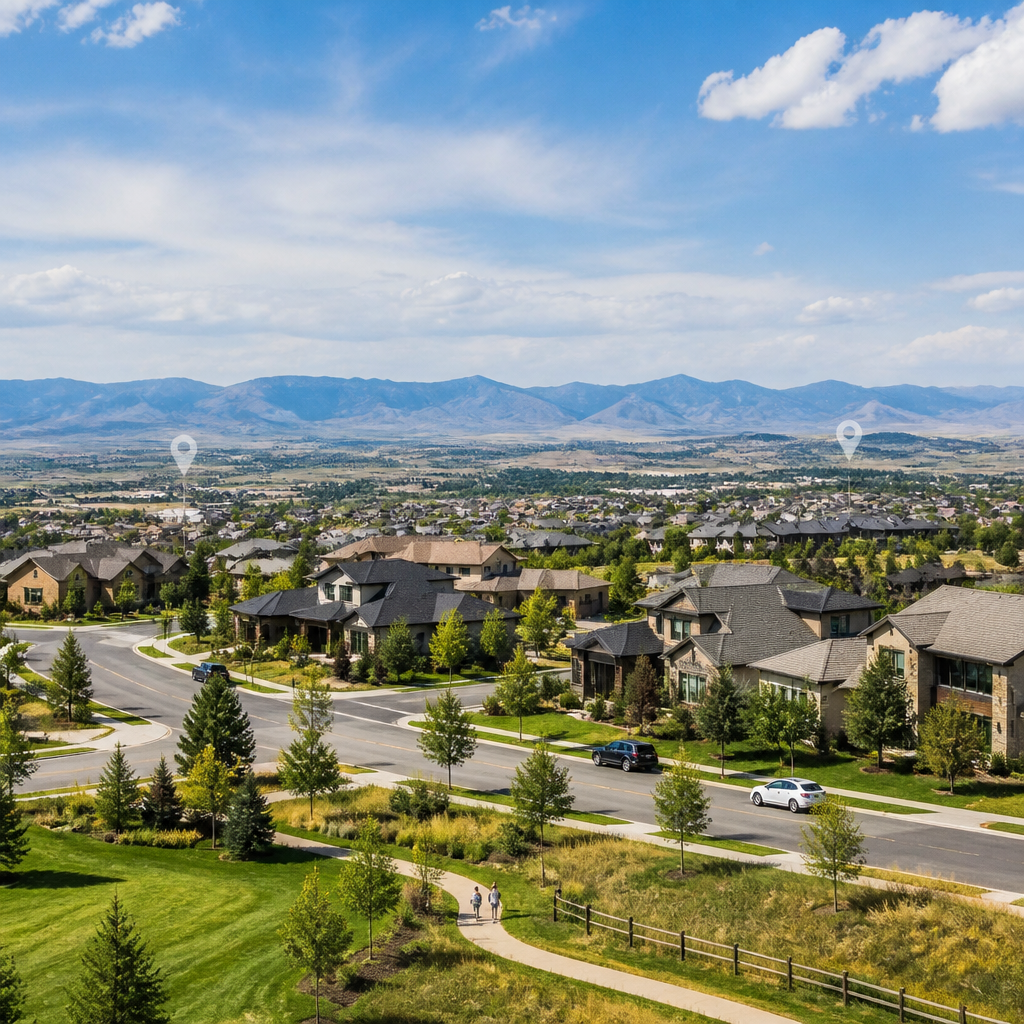
Discover Luxury Homes for Sale in Parker, CO: Your 2026 Guide
Discover Luxury Homes for Sale in Parker, CO: Your 2026 Guide The Parker luxury market continues to mature as Denver’s southeast corridor expands. According to Redfin, Parker’s median sale price sat in the upper $600,000 range in early 2026, while many luxury properties trade well above $1.2M. Estat
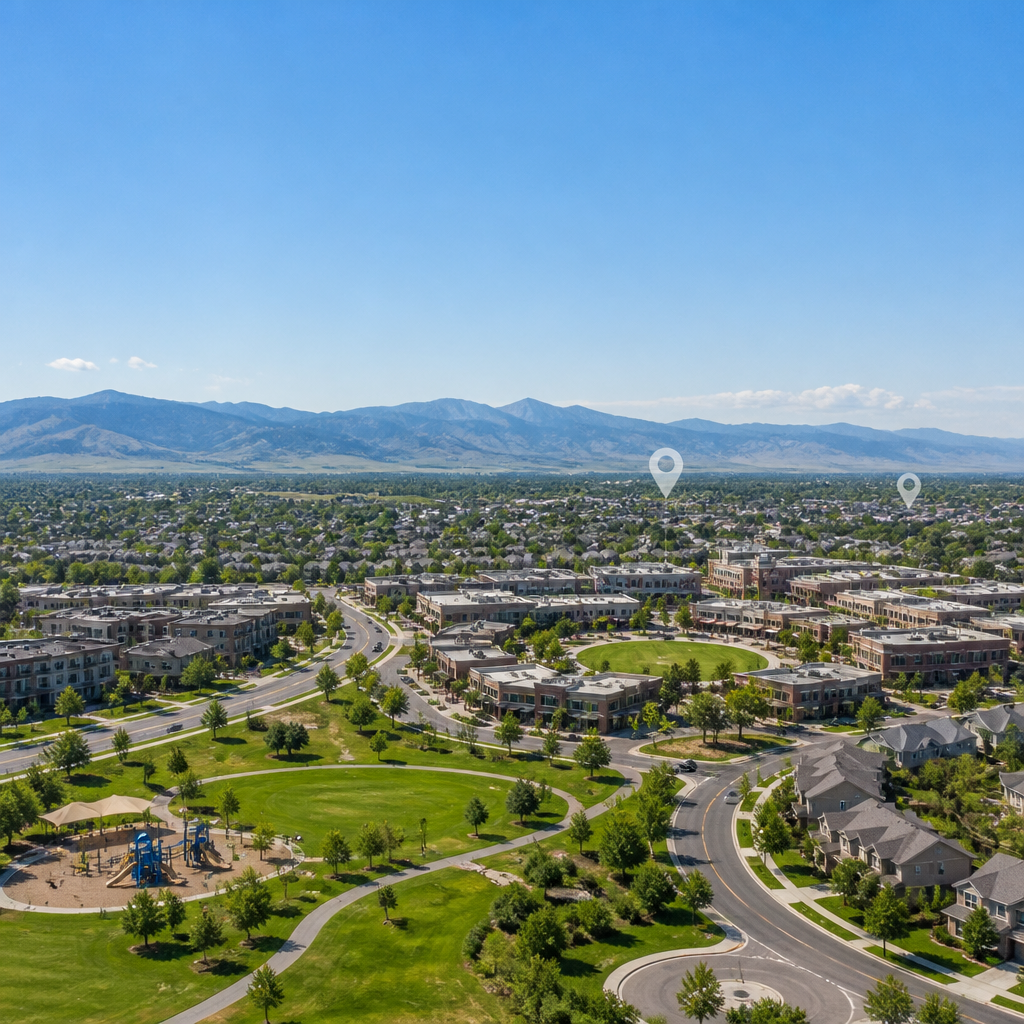
Your Comprehensive Highlands Ranch Neighborhood Guide for 2026
Your Comprehensive Highlands Ranch Neighborhood Guide for 2026 Highlands Ranch in Douglas County continues to attract residents seeking suburban convenience with Front Range scenery. According to Niche, the community’s population exceeds 100,000 residents as of 2026, reflecting steady growth over th